
About
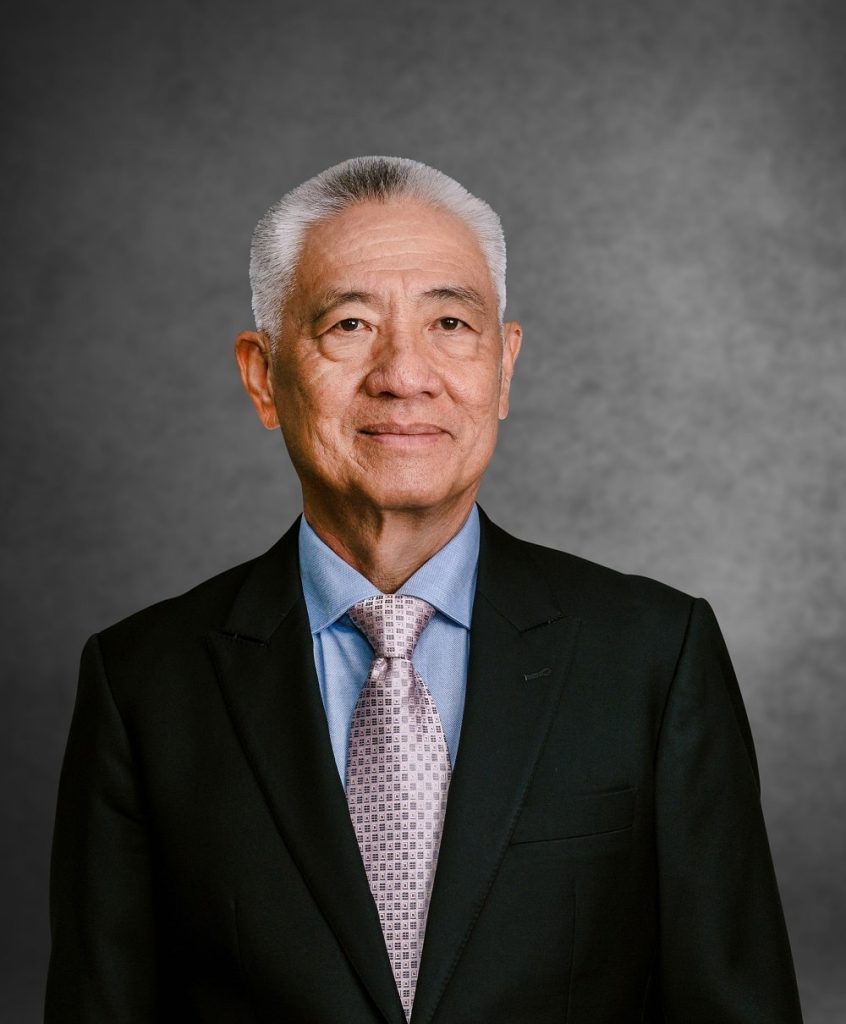
- Born in 1955 in Thanh My village, Chau Thanh district, Tra Vinh province (now part of Vinh Long province), into a poor family.
- He graduated with a Bachelor’s degree in Chemistry from Ho Chi Minh City University of Technology in 1978. In 1979, he emigrated to Canada.
- Born in 1955 in Thanh My village, Chau Thanh district, Tra Vinh province (now part of Vinh Long province), into a poor family.
- He graduated with a Bachelor’s degree in Chemistry from Ho Chi Minh City University of Technology in 1978. In 1979, he emigrated to Canada.
- He completed his bachelor’s and master’s degrees in Chemistry at Concordia University (Montreal, Canada), and then earned his PhD in energy and materials science in 1990 from INRS-Energy-Materials-Telecommunication (Quebec, Canada).
Professional career and inventions
- He has over 25 years of experience working in North America (Canada and the US), having conducted research at the IBM Almaden Center (US), collaborated with INRS (Canada), and held a technical management position at Kodak Polychrome Graphics.
- As a scientific inventor with approximately 700 patents in the US, Canada, China, Vietnam, and many other countries, primarily related to printing materials, energy science, materials science, and more recently, high-tech agriculture and IoT applications in agriculture.
- He founded American Dye Source Inc (Canada), a company specializing in printing materials, which achieved significant revenue and international exports.
Operating in Vietnam
- In 2004, he returned to his hometown of Tra Vinh to invest in a startup with a modest initial capital (approximately $250,000).
- Mylan Group (or My Lan Group) was established – one of the first high-tech enterprises in Tra Vinh, with subsidiaries such as RYNAN Technologies (RYNAN Holdings JSC) in Long Duc Industrial Park.
- He previously served as Head of the Department of Applied Chemistry at Tra Vinh University (2007–2017).
- Considered a pioneer in building a “Silicon Valley” model in the Mekong Delta with a philosophy of sustainable entrepreneurship, business ethics, and an “out-of-the-box” mindset.
1.1. Introduction to My Lan Group
History of formation and development
- In 2004, Mylan Group Joint Stock Company was established – the first high-tech enterprise in Tra Vinh province.
- Initially, he focused on chemicals and printing materials (such as near-infrared absorbing materials, inkjet inks, thermal CTP offset printing plates, luminescent plastics, printing equipment, and innovative packaging). These products were exported to many countries, leveraging the experience from his previous companies in North America (such as American Dye Source Inc.).
- In 2015, the Group expanded into an ecosystem of subsidiaries, shifting strongly towards high-tech agriculture and IoT.
Principles and philosophy
- The corporation focuses on sustainable development, business ethics, and “thinking outside the box” (thinking differently to solve real-world problems).
- This creates jobs for hundreds of local workers in Tra Vinh, helping to retain people in their hometown instead of encouraging them to migrate.
- Combining science, business, and philanthropy (through the Nguyen Thanh My Foundation, which supports education, healthcare, and housing for the poor).
- Considered a successful model of overseas Vietnamese returning to invest, it has built a “Silicon Valley” in the style of the Mekong Delta, focusing on high-tech agriculture.
1.2. Introduction to Rynan Group
RYNAN focuses on developing and applying advanced technologies such as IoT, AI, Big Data, Edge Computing, remote sensing, and cloud computing in the fields and industries of agriculture, fisheries, and environment. Key activities include:
- Building a smart product ecosystem for precision agriculture, sustainable aquaculture, and environmental monitoring (water, emissions, pests and diseases).
- Providing solutions for agricultural product traceability, digital value chain management, pest and disease warning and forecasting, and environmental monitoring.
- Deploying platforms such as: VDAPES (Vietnam Digital Agriculture Platform Ecosystem), InSENTINEL (smart insect monitoring), TOMGOXY (super-intensive shrimp pond management), MethanEYE (monitoring methane emissions in rice fields), RYNAN@ MEKONG (mobile monitoring application), and water quality measurement devices.
- Market: Primarily domestic (Mekong Delta provinces such as Dong Thap, Tra Vinh, Kien Giang, An Giang, Long An, Soc Trang; government agencies, NGOs, fertilizer/agricultural supplies businesses) and export (Thailand, Japan, Brunei, etc.).
- With a total workforce of approximately 103 people, the company’s ( a 27% increase in 2023-2024). The data center is ISO/IEC 27001:2022 certified and at level 3 for information security.
Notable achievements and awards
- 2021: Silver Award in the “Outstanding Digital Product” category – InSENTINEL Smart Insect Monitoring System (product revenue growth after the award: +615.97%, from 4.9 billion to 35 billion VND; number of customers +84.62%).
- 2022: Gold Award in the “Potential Digital Product” category – Smart solution for analyzing and quantifying organic waste in aquaculture (revenue growth +621.69%, number of customers +400%).
- 2023: First Prize in the “Qualcomm Vietnam Innovation Challenge” – with InSENTINEL.
- 2024:
- Silver Award in the “Outstanding New Digital Technology Product” category – MethanEYE Smart Methane Emission Monitoring Network Solution (for climate change-adaptive rice fields).
- Top 10 in the category “Outstanding Digital Technology Products in the Field of Agriculture, Resources and Environment” – VDAPES Vietnam Digital Agriculture Platform Ecosystem (already piloted in Dong Thap).
1.3. DIFFERENCES
Dr. Nguyen Thanh My’s approach, through the My Lan and RYNAN models, has some “counter-current” differences compared to the general trend of technology deployment in Vietnam today:
- Private sector leadership instead of dependence on state-owned “giants”
While many localities often prioritize large state-owned telecommunications corporations for digital transformation implementation, the RYNAN model asserts that private enterprises can provide the flexibility and rapid innovation that large corporations struggle to achieve. The proposed pilot mechanism for private sector leadership in provincial-level digital transformation (as in Tra Vinh and Dong Thap) is a groundbreaking approach that optimizes costs and practical efficiency for farmers.
- Developed based on “Core Technology” and patents (Deep Tech)
Unlike the common trend of importing technology or outsourcing, Dr. Nguyen Thanh My’s approach is based on an extremely strong foundation of R&D:
- It holds approximately 700 patents worldwide.
- Focus on challenging technologies like printing materials, IoT, AI, and materials chemistry right from the start.
- Demonstrate the capacity for “self-reliance” by transforming international scientific knowledge into solutions suitable for Vietnam’s practical situation.
- Solving local problems using “Outside the Box” thinking.
Instead of copying models from abroad, RYNAN’s products focus directly on the specific pain points of Vietnam:
- Turning challenges into opportunities: Instead of just trying to combat saltwater intrusion, he shifted his focus to industrial salt production.
- Specifically, the solution involves developing specialized systems such as intelligent insect monitoring (InSENTINEL), methane monitoring in rice paddies (MethanEYE), or management of super-intensive shrimp ponds (TOMGOXY).
- Building a “Silicon Valley” in remote areas.
Typically, high-tech centers are concentrated in Hanoi or Ho Chi Minh City. However, My Lan Group has built a technology ecosystem right in Tra Vinh. This is a rare combination of:
- Business and Education: He previously served as Head of Department at Tra Vinh University to train local human resources.
- Retaining the workforce: Creating jobs for hundreds of local people, helping them avoid leaving their hometowns.
- A comprehensive ecosystem: From ink manufacturing plants to biotechnology and digital agriculture centers.
- The aspiration is to export “models” instead of just products.
The ultimate goal of this approach is not just to sell equipment, but to export both the technology and the sustainable development model internationally (to Thailand, Japan, Brunei, etc.). This would shift Vietnam’s position from a technology consumer to a provider of solutions to similar problems in other countries.
Comparison table of RYNAN’s technology solutions
|
Product/Solution Name |
Achievements & Awards |
Revenue Growth |
Customer Growth |
|
InSENTINEL insect monitoring system |
Silver Award for “Outstanding Digital Product” (2021); First Prize for “Qualcomm Vietnam Innovation Challenge” (2023). +1 |
+615.97% (from 4.9 billion to 35 billion VND). |
+84,62%. |
|
Quantitative solution for organic waste (Aquaculture) |
Gold Award for “Promising Digital Product” (2022). |
+621,69%. |
+400%. |
|
Methane Emission Monitoring Network (MethanEYE) |
Silver Award for “Outstanding New Digital Technology Product” (2024). |
|
|
|
VDAPES digital agriculture platform |
Top 10 “Outstanding Digital Technology Products” in the agricultural sector (2024). +1 |
Currently undergoing pilot testing in Dong Thap province. |
Currently undergoing pilot testing in Dong Thap province. |
RYNAN’s overall operating indicators (2023-2024)
- Total company revenue:
- Overall growth rate: Reached 27% .
- Staff size: Approximately 103 people .
- Infrastructure standards: The data center is internationally certified ISO/IEC 27001:2022 and Level 3 for information security.
Key aspects of commercial effectiveness:
- Borderless market: Not limited to the Mekong Delta provinces (Dong Thap, Tra Vinh, Kien Giang…), Mr. My’s technology has begun exporting to countries in the region such as Thailand, Japan, and Brunei .
- Data reliability: Achieving level 3 in information security gives private businesses like RYNAN sufficient standing to propose direct connections to national agricultural databases.